Wheel Alignment: Prices Vary Contact Us
Starting at $99.00
What it is
Wheel alignment adjusts the angles of your wheels so they’re perpendicular to the ground and parallel to each other. Proper alignment ensures even tire wear, stable handling, better fuel economy, and safer driving.
Why it matters
Uneven tire wear shortens tire life and costs you money.
Misalignment causes pulling, drifting, or a crooked steering wheel.
Poor alignment reduces braking stability and can affect suspension components.
Correct alignment improves gas mileage and ride comfort.
Signs you need an alignment
Steering wheel pulls left or right when driving straight.
Steering wheel is off-center when you’re driving straight.
Tires show uneven or rapid wear (feathering, scalloping, inner/outer edge wear).
Vehicle vibrates or feels loose at higher speeds.
You’ve hit a large pothole, curb, or had suspension work done.
What we check and adjust
Camber: inward/outward tilt of the tire at the top.
Toe: direction tires point relative to centerline (toe-in or toe-out).
Caster: angle that affects steering stability (typically adjusted on some vehicles).
Steering linkage, tie rods, ball joints, control arms, and suspension bushings for wear.
Tire condition and pressure (we retest inflation for proper results).
The Masters Hand process (precise)
Road test and inspect tires/suspension — we listen to squeaks, feel the pull, and check tire wear patterns.
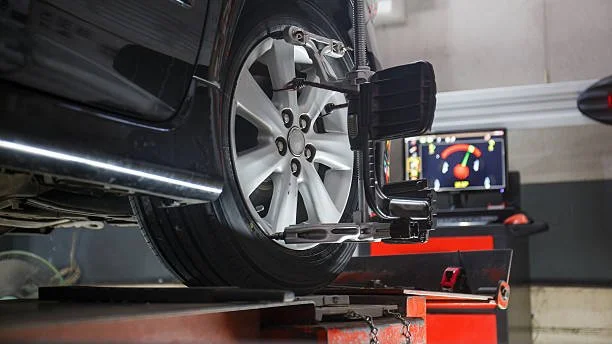
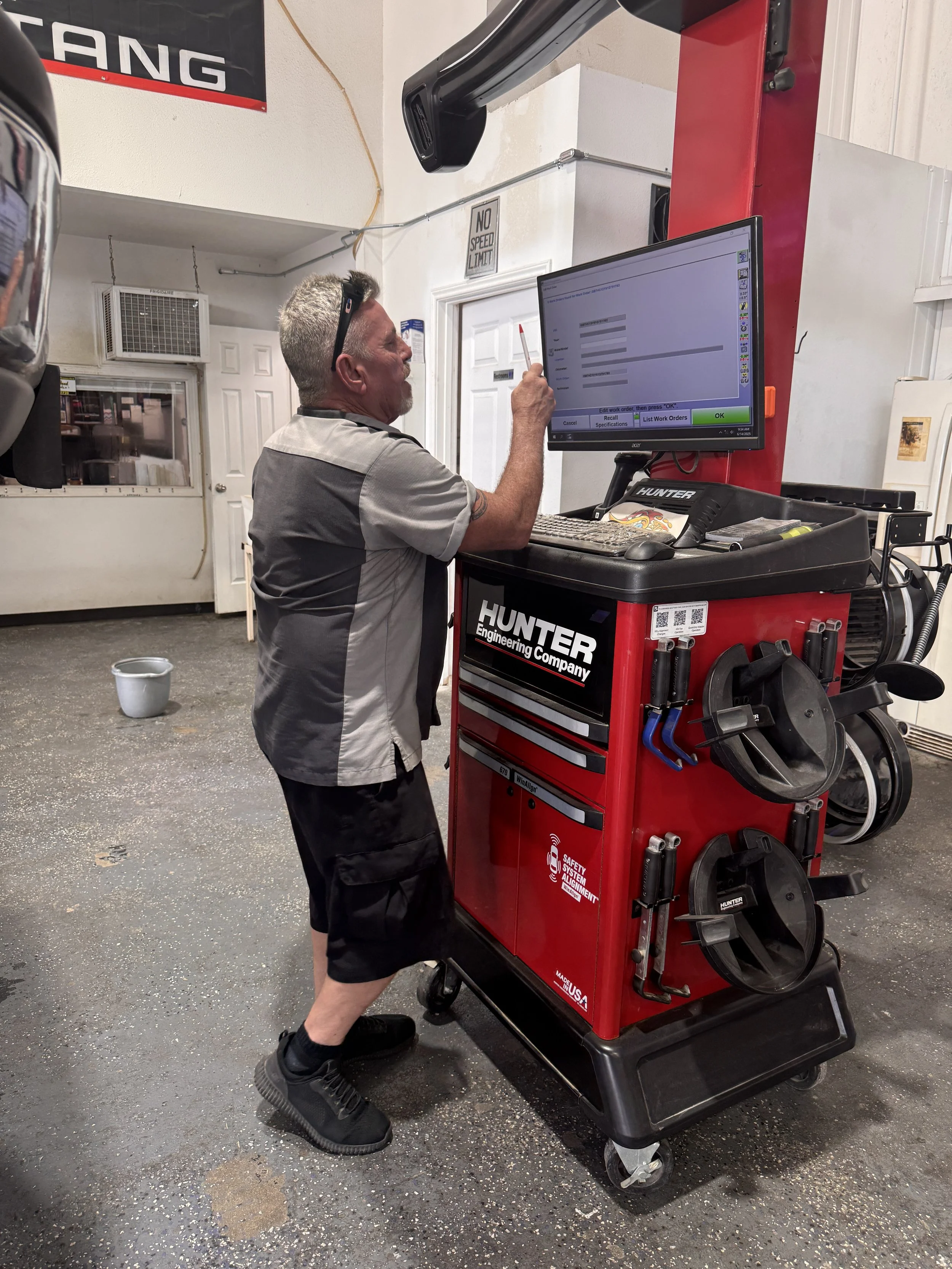
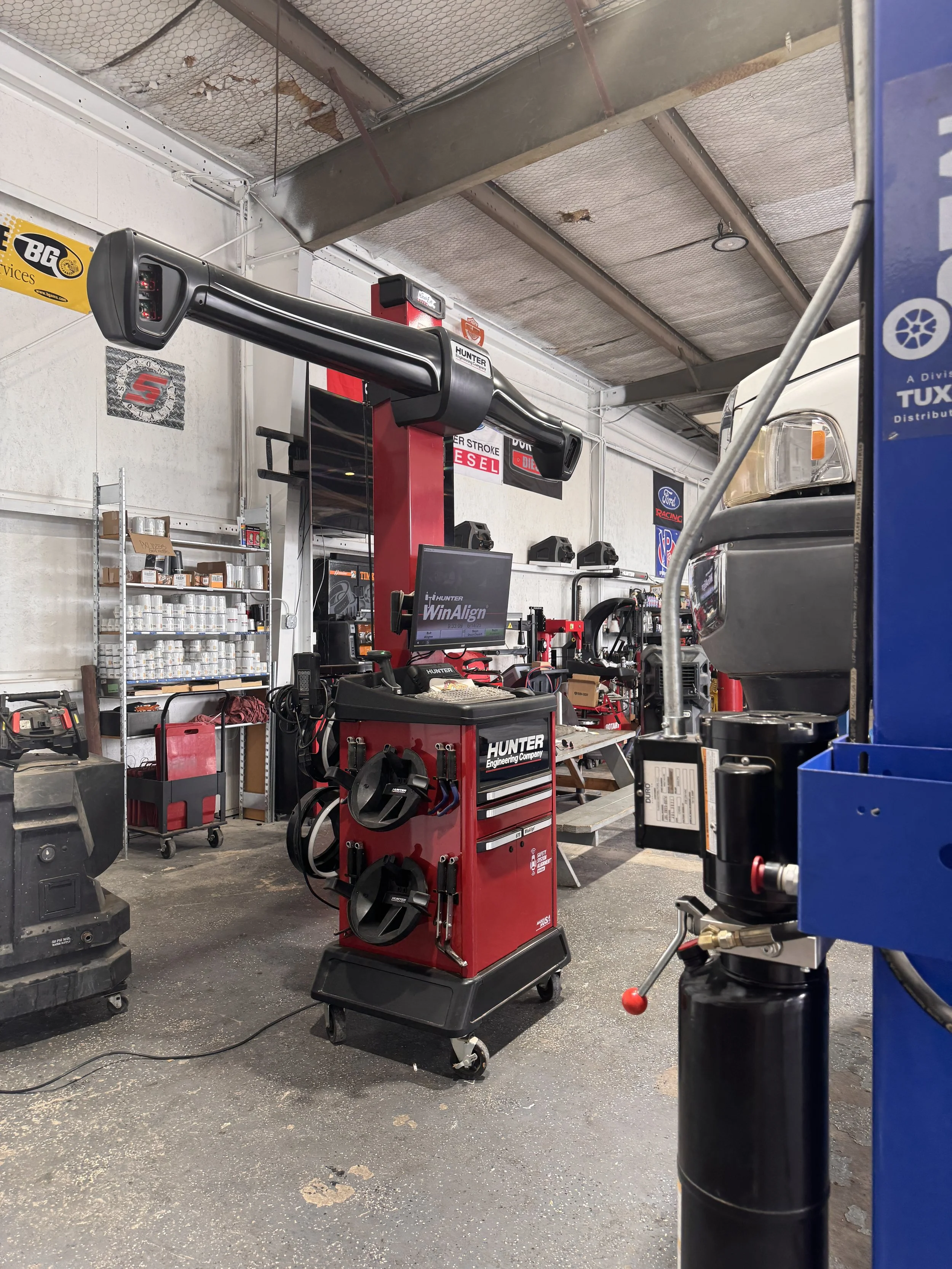
Put your vehicle on our alignment rack and attach precise sensors.
Measure current alignment angles and compare to manufacturer specs.
Adjust toe, camber, and caster where possible; replace or recommend worn parts if needed.
Final road test to verify alignment under real driving conditions.
Provide a printout (or friendly stare) showing before-and-after specs and recommendations.
How long it takes
Typical alignment: 45–90 minutes.
If parts need replacement (tie rods, control arms), additional time is required.
How much it costs
Varies by vehicle and whether adjustments or parts are needed. We provide a clear estimate before work begins.
When to align
Every 1–2 years as preventative maintenance or sooner if you notice symptoms.
After installing new tires (recommended).
After suspension work, hitting a curb, or severe potholes.
Tire and alignment tips
Rotate tires regularly to even out wear.
Keep tires inflated to recommended pressure.
Replace tires when tread is too low or wear is uneven—even a perfect alignment won’t fix badly worn tires.
Why choose Masters Hand
42 years fixing cars and saving tires.
Thorough inspections and honest recommendations — no upsell circus.
Precise equipment, experienced technicians, and a friendly, approach that treats your car like family (the reliable, non-argumentative kind).
Ready to ride straight and true? Schedule an alignment check with Masters Hand — we’ll straighten things out so your car behaves and your tires live longer.
Starting at $99.00
What it is
Wheel alignment adjusts the angles of your wheels so they’re perpendicular to the ground and parallel to each other. Proper alignment ensures even tire wear, stable handling, better fuel economy, and safer driving.
Why it matters
Uneven tire wear shortens tire life and costs you money.
Misalignment causes pulling, drifting, or a crooked steering wheel.
Poor alignment reduces braking stability and can affect suspension components.
Correct alignment improves gas mileage and ride comfort.
Signs you need an alignment
Steering wheel pulls left or right when driving straight.
Steering wheel is off-center when you’re driving straight.
Tires show uneven or rapid wear (feathering, scalloping, inner/outer edge wear).
Vehicle vibrates or feels loose at higher speeds.
You’ve hit a large pothole, curb, or had suspension work done.
What we check and adjust
Camber: inward/outward tilt of the tire at the top.
Toe: direction tires point relative to centerline (toe-in or toe-out).
Caster: angle that affects steering stability (typically adjusted on some vehicles).
Steering linkage, tie rods, ball joints, control arms, and suspension bushings for wear.
Tire condition and pressure (we retest inflation for proper results).
The Masters Hand process (precise)
Road test and inspect tires/suspension — we listen to squeaks, feel the pull, and check tire wear patterns.
Put your vehicle on our alignment rack and attach precise sensors.
Measure current alignment angles and compare to manufacturer specs.
Adjust toe, camber, and caster where possible; replace or recommend worn parts if needed.
Final road test to verify alignment under real driving conditions.
Provide a printout (or friendly stare) showing before-and-after specs and recommendations.
How long it takes
Typical alignment: 45–90 minutes.
If parts need replacement (tie rods, control arms), additional time is required.
How much it costs
Varies by vehicle and whether adjustments or parts are needed. We provide a clear estimate before work begins.
When to align
Every 1–2 years as preventative maintenance or sooner if you notice symptoms.
After installing new tires (recommended).
After suspension work, hitting a curb, or severe potholes.
Tire and alignment tips
Rotate tires regularly to even out wear.
Keep tires inflated to recommended pressure.
Replace tires when tread is too low or wear is uneven—even a perfect alignment won’t fix badly worn tires.
Why choose Masters Hand
42 years fixing cars and saving tires.
Thorough inspections and honest recommendations — no upsell circus.
Precise equipment, experienced technicians, and a friendly, approach that treats your car like family (the reliable, non-argumentative kind).
Ready to ride straight and true? Schedule an alignment check with Masters Hand — we’ll straighten things out so your car behaves and your tires live longer.